Cleat Nails
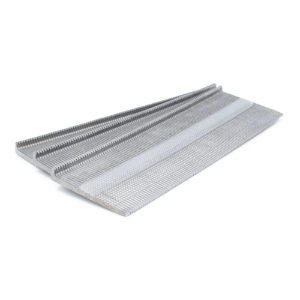
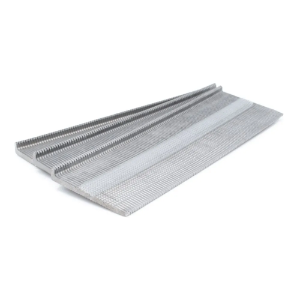
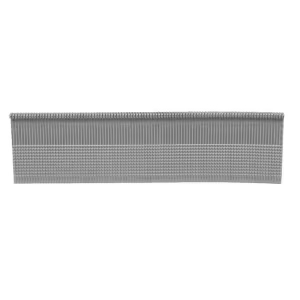
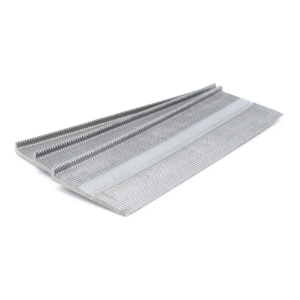
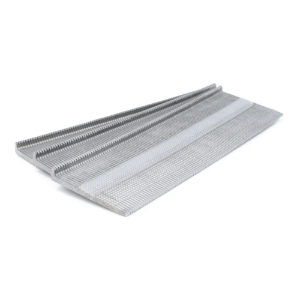
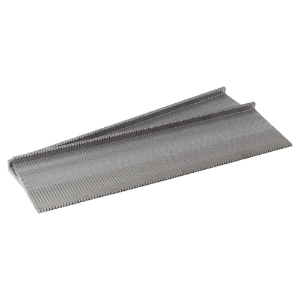
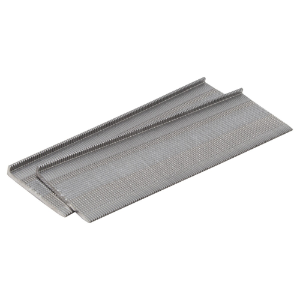
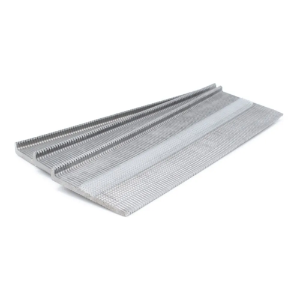
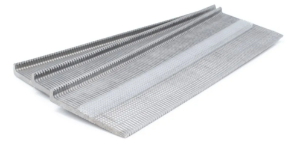
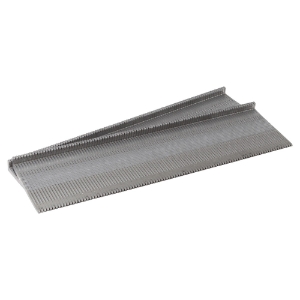
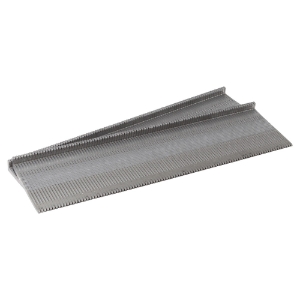
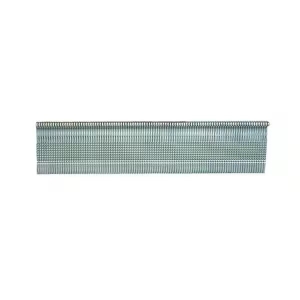

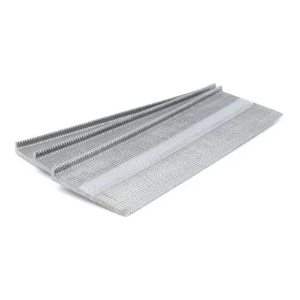
LINC Systems stocks cleat nails for hardwood flooring: L-cleat flooring cleats in 16, 18 and 20 gauge, from 1-1/4" to 2" long, from CORUS, SPOTNAILS and Bostitch, packed 1,000 or 1,200 to a box. These L-cleat flooring nails are made for hardwood floor installation with a manual or pneumatic flooring nailer, on solid hardwood planks and engineered wood flooring. L cleat nails are designed to sit hidden in the tongue of each board.
Find the Right Cleat Nails for Your Floor
Start with the flooring thickness, then match the gauge your nailer takes. This table shows where most installers start. Always check the flooring maker's instructions first, since they set the fastener size and spacing the warranty depends on.
- 3/4" solid hardwood over 3/4" plywood or OSB: common gauge: 16 gauge; common cleat length: 2"; notes: The standard job for most flooring crews.
- 3/4" solid hardwood over a thinner subfloor: common gauge: 16 gauge; common cleat length: 1-3/4"; notes: Keep the cleat from going through the subfloor.
- 5/8" and 1/2" solid or engineered flooring: common gauge: 16 or 18 gauge; common cleat length: 1-1/2" to 1-3/4"; notes: 18 gauge lowers the risk of splitting the tongue.
- Thin engineered flooring, 3/8" to 1/2": common gauge: 18 or 20 gauge; common cleat length: 1-1/4" to 1-1/2"; notes: Thinner cleats for thinner tongues.
- Dense exotic species: common gauge: 18 gauge; common cleat length: Per flooring maker; notes: Hard woods split more easily.
Not sure which size fits your job? Call 800.513.9918 and tell us the flooring, the subfloor and your nailer model.
What Are Cleat Nails?
Cleat nails are flooring fasteners with a barbed shank and an L-shaped or T-shaped head. A flooring nailer drives them at an angle through the tongue of each board and into the subfloor. The next board covers the head, so no fasteners show on the finished floor. Installers also call them flooring nails, flooring cleats or L-cleat nails.
The barbs grip the wood fibers, and the thin, flexible shank lets the floor expand and contract with the seasons without working loose. The barbs work like serrated edges along the nail, and the shank's flexibility is what keeps the hold as the floor moves. That flex is the main reason installers use flooring cleats instead of staples on solid hardwood. Each nail holds its board without locking it in place, so a floor held with cleats is less likely to squeak, creak or develop gaps as it moves through dry winters and humid summers.
Cleat nails are sold in strips held together with glue, sized by gauge (thickness) and length. A lower gauge number means a thicker cleat: a 16 gauge cleat is thicker and stiffer than an 18 or 20 gauge cleat. Every cleat nail on this page is bright (uncoated) steel, which is the norm for interior flooring installed over a dry subfloor.
Cleat Nail Types and Sizes: L-Cleat Flooring Nails by Gauge
L-Cleats
L cleat flooring nails have a head bent to one side, shaped like the letter L. They are the most common flooring cleat today and the only style in this category. CORUS, SPOTNAILS and Bostitch L-cleats are made to feed in most manual and pneumatic flooring nailers that take L-shaped cleats.
T-Cleats
T-cleats have a head that sticks out on both sides, like the letter T. Some older flooring nailers were built for them. T-cleats are not the same as T-nails, which are made for T-nailers. If your nailer takes T-cleats, L-cleats will not feed correctly. Check the tool's label or manual before you order, or call us and we will check it for you.
16 Gauge (16ga) L-Cleat Nails for Hardwood Flooring
16 gauge L cleat nails (16ga, or 16 ga) are the standard for 3/4" solid hardwood floor installation. They have the most holding power of the three gauges and stand up to repeated hits from a mallet-driven nailer. LINC stocks 16 gauge cleats in 1-1/2", 1-3/4" and 2" lengths. The most common 16ga L cleat is the 16 gauge 2 inch length L-cleat nail for hardwood flooring that is 3/4" thick, such as the CORUS CLT50-1M, the SPOTNAILS 26132 or the Bostitch FLN-200.
18 Gauge (18ga) L-Cleats for Engineered Wood and Thinner Flooring
18 gauge cleats are thinner. Installers use them on thinner solid flooring, on engineered flooring and on dense species where a 16 gauge cleat can split the tongue. LINC stocks 18 gauge cleats in 1-1/4", 1-1/2" and 1-3/4" lengths. Each 18ga L cleat box from CORUS or SPOTNAILS holds 1,000 or 1,200 nails.
20 Gauge L-Cleats
20 gauge cleats are the thinnest. They suit thin engineered flooring with a narrow tongue, where a heavier nail could split the edge. LINC stocks a 1-1/4" 20 gauge L-cleat from CORUS.
Cleat Nails vs Flooring Staples
Both cleat nails and flooring staples hold hardwood flooring, and both are driven through the tongue. The difference is how they behave once the floor starts to move.
Cleats have one barbed leg that flexes with the wood floor. That is why many hardwood installers and flooring makers prefer cleats for solid hardwood, especially wide boards and areas with big humidity swings.
Staples have two legs and grip hard right away, where a cleat is a single nail. They can hold engineered flooring well, but on solid hardwood a staple's tight grip can split the tongue on dense woods and can loosen as the floor moves, which can lead to squeaks.
The flooring maker usually states which fasteners it accepts. If it lists both, cleats are the safer choice for solid hardwood and staples are a common choice for engineered flooring.
How to Choose Cleat Nails, Step by Step
- Check the flooring maker's instructions. The flooring manufacturer lists the fastener type, gauge, length and spacing. Follow them first.
- Measure the flooring and the subfloor. The cleat should reach well into the subfloor without coming out the bottom. Match the inch length to the hardwood flooring and subfloor thickness. Thicker flooring over a 3/4" subfloor usually takes a 2" cleat.
- Match the gauge to your nailer. Most flooring nailers take only one gauge. A 16 gauge nailer will not drive 18 gauge cleats properly, and the reverse is also true.
- Check the cleat shape. Confirm your nailer takes L-cleats. All the cleats on this page are L-cleats.
- Order enough for the job. Flooring nailers drive one cleat about every 6" to 8" along each board, plus one near each end. Most crews keep a spare box or two on site so they never run out mid-room.
Flooring Installation Basics for a Hardwood Floor
Before you install, read the flooring installation guide that came with the boards. A successful installation comes down to the right cleat for the flooring materials, a nailer that matches the gauge and shape, and the spacing the manufacturer calls for. Get those three right and each nail will secure hardwood boards for the life of the floor, whatever the application: oak, maple, hickory or another hardwood.
Bulk Cleat Nails and Flooring Nails, On Your Schedule
Flooring contractors and installers buy cleat nails and other hardwood flooring nails by the box, by the case and by the pallet. Most cleats on this page come 1,000 or 1,200 to a box, five boxes to a case. Many CORUS items also ship by the pallet.
Have a LINC account? Sign in to see your pricing. New customers can request a quote online or call 800.513.9918. If your flooring nailer needs work, our fastening tool service and repair team can help, and you can find more of our nails here.
Get Bulk Pricing or call 800.513.9918
Cleat Nail FAQs
What are cleat nails used for?
Hardwood flooring. Cleat nails fasten tongue-and-groove wood flooring to the subfloor through the tongue, so the fasteners stay hidden.
What is the difference between an L-cleat and a T-cleat?
The head shape. An L-cleat has a head bent to one side, and a T-cleat has a head on both sides. Your nailer takes one or the other, not both.
What size cleat nails do I need for 3/4" hardwood flooring?
Usually 2", 16 gauge. Over a thinner subfloor, many installers drop to 1-3/4". Always check the flooring maker's instructions.
Will these flooring cleats fit my nailer?
Most likely, if your nailer takes L-cleats in the same gauge. Call 800.513.9918 with your nailer brand and model and we will confirm it before you order.
Are cleats better than staples for hardwood flooring?
For solid hardwood, usually yes. Cleats flex as the floor moves, which helps prevent squeaks and split tongues. Follow the flooring maker's fastener instructions.
How many cleat nails do I need?
It depends on the room. Plan on one cleat every 6" to 8" along each plank, plus one near each end, or use the spacing your flooring manufacturer gives. Most crews keep a spare box on site.
Do cleat nails work on engineered wood flooring?
Yes. Thinner 18 and 20 gauge L-cleats suit engineered flooring with a thinner tongue. Check the flooring maker's fastener instructions first.
What is the best flooring nailer for hardwood floors?
The one that matches your cleats. A flooring nailer takes one gauge and one cleat shape, so pick the nailer and the cleats together, based on the flooring. If your flooring nailer needs work, our fastening tool service and repair team can help.
Can I get volume pricing on cleat nails?
Yes. Sign in to your LINC account for your pricing, or call 800.513.9918 for a quote on cases or pallets.
Another question? Call 800.513.9918 or contact us.