Stretch Wrappers
Stretch Wrappers That Wrap Every Load the Same Way
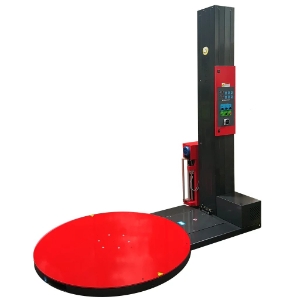
A stretch wrap machine applies film with the same tension and overlap on every pallet, so loads stay tight in transit and you use less film than wrapping by hand. LINC carries semi-automatic turntable stretch wrappers from Wulftec and Berran Industrial, plus the portable Robopac Robot S7. They are part of our automated packaging equipment lineup.
A stretch wrapper is also called a pallet wrapper or a pallet wrapping machine. Whatever you call it, the job is the same: wrap stretch film around palletized loads so the products on the pallet move, ship and store as one secure unit.
What Is a Stretch Wrapper and How Does It Work?
A stretch wrapper holds a roll of film in a carriage that travels up and down a mast. On a turntable stretch wrapper, the pallet sits on a turntable that rotates while the carriage moves. On a rotary arm or robotic machine, the load stays still and the film travels around the load instead.
The wrapping process is simple. The operator attaches the film tail to the pallet and starts the cycle. The machine applies bottom wraps, spirals the film up to the top of the load, applies top wraps and comes back down. At the end of the cycle the film is cut and the tail is pressed onto the load. On a semi-automatic stretch wrapper, the operator handles the film tail and the film cut. A fully automatic machine does those steps on its own.
Pre-Stretch and Film Usage
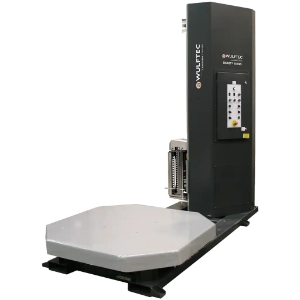
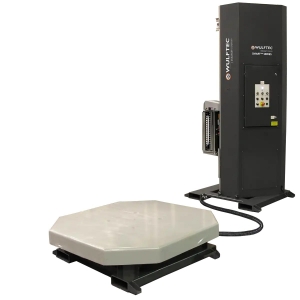
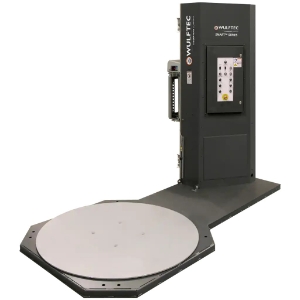
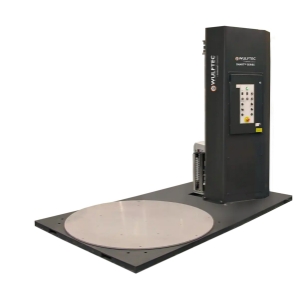
Many machines stretch the film between rollers in the carriage before it touches the load. This film pre-stretch means each roll of film covers more loads, and the film is stretched evenly instead of by a worker pulling on it. LINC's site lists Wulftec SMART Series turntables with a choice of a NO-Thread powered pre-stretch carriage or a carriage without pre-stretch, in 20" or 30" film widths. Controlled film application helps reduce film waste and keeps film usage steady from load to load.
Load Containment and Load Stability
Load containment is how tightly the film holds the load together. The right tension and the right number of wraps keep cartons from shifting, which improves load stability and helps reduce product damage during storage and transportation. A machine applies the same pattern every time, so you are not counting on each worker to wrap the same way.
Which Stretch Wrapper Fits Your Operation?
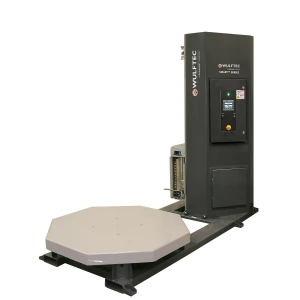
- Low profile turntable (Wulftec SMART SML series): the turntable sits close to the floor, so pallets are easy to load with a pallet jack.
- High profile turntable (Wulftec SMART SMH series): a raised turntable for loading with a forklift.
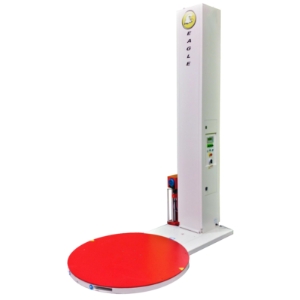
- Berran Industrial Eagle series: semi-automatic wrappers for steady, everyday wrapping.
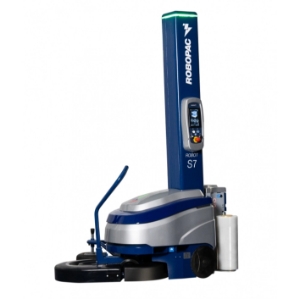
- Portable robot (Robopac Robot S7): a battery-powered machine that drives around the load. Good for oversized, odd-shaped or heavy loads, or when you wrap in more than one spot.
Types of Stretch Wrappers
The main types of stretch wrappers include turntable, rotary arm, robotic and orbital machines, and each comes in semi-automatic or automatic versions. The models on this page are semi-automatic turntable wrappers and a portable robot. LINC's site also lists automatic turntable stretch wrappers, rotary arm stretch wrappers and orbital wrappers from Orion, Wulftec and Robopac, so call us if your load needs one of those.
Semi-Automatic Turntable Stretch Wrappers
A semi-automatic turntable stretch wrapper is the most common choice for shops moving from hand wrap to machine wrap. The operator places the pallet on the turntable, attaches the film and starts the cycle, then cuts the film at the end. The Wulftec SMART Series and the Berran Industrial Eagle 1000A, 1000B and 2000BE on this page are semi-automatic turntable machines. Low profile turntable pallet models suit pallet jack loading. High profile models are loaded with a forklift.
Automatic Turntable Stretch Wrappers
An automatic turntable stretch wrapper starts, wraps, cuts and clamps the film without an operator at the machine. Loads are usually brought in on a conveyor or by a forklift driver who starts the cycle and moves on. LINC's site lists automatic turntable models from Orion and Wulftec.
Rotary Arm Stretch Wrappers
Rotary arm stretch wrappers move the film around a load that stays still. LINC's site says Wulftec rotary arm models offer more flexibility for unique load shapes or weights and suit very light, very heavy, tall or unstable loads, because the load does not rotate.
Portable and Robotic Stretch Wrappers
Robotic stretch wrappers drive around the load on their own, so there is no turntable or mast to set the pallet on. LINC's site says the Robopac Robot S7 can wrap loads of any length and width, runs on a battery and lists a production speed of up to 30 loads per hour. It is a good fit for heavy loads, oversized loads and shops that wrap in more than one place.
Orbital Wrappers
Orbital wrappers pass the load through a rotating ring and wrap it horizontally. LINC's site lists Orion orbital machines for long loads that cannot be wrapped on conventional stretch wrap machines, such as lumber and other building materials.
Semi-Automatic vs. Automatic Stretch Wrappers
A semi-automatic stretch wrapper needs an operator at the start and end of each cycle. It costs less, takes up less room and is a good fit when you wrap a steady number of loads per day. Several semi-automatic models on this page list an operating speed of 55 loads per hour.
A fully automatic stretch wrapper handles the film tail, the film cut and the wrap cycle on its own. Automatic wrappers make sense when throughput is high, when loads come off a conveyor, or when you want to move workers to other tasks. The more loads per hour you wrap, the more automation tends to pay off. Tell us your loads per hour and we can help you compare semi-automatic and automatic turntable options.
Why Switch From Hand Wrapping?
Hand wrapping is slow, uses more film than needed and changes from worker to worker. A stretch wrapper cuts film use, speeds up shipping and takes a tiring, repetitive job off your team, which can reduce injuries.
Compared to manual wrapping, a machine also gives you the same load containment on every pallet. That means fewer loads that lean or fall apart in the truck, less product damage and less manual labor walking circles around pallets. These are the main ways a stretch wrapping system can increase productivity and increase efficiency on the dock.
What Is Stretch Wrap Used For?
Stretch wrap, also called stretch film or pallet wrap, is a thin plastic film that stretches and clings to itself. It is used to hold boxes and products together on a pallet, keep dust and dirt off the load and help secure pallet loads for storage and transportation. Warehouses, distribution centers, manufacturing plants, building materials suppliers and furniture makers all use it.
Is Stretch Wrap the Same as Cling Film?
No. Both cling, but kitchen cling film is made for food. Stretch wrap is an industrial film made to stretch and hold the weight of a pallet load. Stretch film is also different from shrink film, which tightens when heat is applied.
What Is Stretch Wrap Made Of?
Most stretch wrap is made from linear low-density polyethylene (LLDPE), a plastic that can stretch a long way without tearing. Some films add recycled or bio-based content.
Is Stretch Wrap Recyclable?
It can be, where a recycler accepts it. LINC's site says Berry's Biovantage film is recyclable through LLDPE recycling streams and Paragon's Beyond PCR machine film is designed for 100% recyclability. See our sustainable packaging options for more.
Film for Your Machine
Machine wrappers need machine-grade film. Shop our stretch film, or call us and we'll match film to your wrapper and loads.
The right film type depends on your machine, your load weight and how much pre-stretch your carriage applies. If you still wrap some loads by hand, we also carry hand film and stretch film dispensers.
How to Choose the Right Stretch Wrapper
Which stretch wrapper is best depends on your loads and your volume. Answer these questions first:
- How many loads do you wrap? Count loads per day and at your busiest hour. This decides semi-automatic or automatic.
- What size and weight are your loads? Check your pallet sizes, load heights and heaviest loads against each machine's limits. Some models on this page list a maximum load weight of 3500 lbs, and the Robot S7 lists unlimited load length and width.
- How do loads reach the wrapper? Pallet jack loading points to a low profile turntable. Forklift loading points to a high profile turntable.
- Are your loads stable? Tall, light or unstable loads may do better on a machine where the load does not rotate, such as a rotary arm or a robot.
- Where will it run? Check floor space, power and whether you need to wrap in one spot or several.
Send us your answers and we'll recommend the stretch wrapper that fits your packaging needs.
The Last Step in Your Packaging Line
A pallet wrapper is usually the last machine before the truck. Many shops also use strapping to hold heavy loads to the pallet and edge and corner protection to keep film and straps from crushing carton edges.
Installation, Service and Parts
LINC's technical service team has more than 100 years of combined experience with packaging equipment. We install, maintain and repair stretch wrappers and supply parts. Learn more about our packaging equipment service.
LINC offers turnkey installation for stretch wrap equipment, including mechanical and electrical installation, start-up and training for operators and maintenance staff. Our parts supply network covers almost all manufacturers of stretch wrappers, and we offer preventive maintenance to keep your wrapping machine running.
Get a Quote
Tell us your pallet sizes, load weights and how many loads you wrap a day, and we'll recommend the right machine. Sealing cartons or bagging parts before they reach the pallet? See our case sealers and Ravizza bagging machines. Call 800.252.5894 or contact us.
Stretch Wrapper FAQs
What is the difference between a low profile and high profile stretch wrapper?
A low profile turntable is close to the floor for loading with a pallet jack. A high profile turntable sits higher and is loaded with a forklift.
How many loads per day before a stretch wrapper pays off?
It depends on your labor and film costs, but many shops that wrap more than a handful of pallets a day see savings quickly. Call us and we'll help you run the numbers.
Can I use hand stretch film in a stretch wrapper?
No. Machines need machine-grade film on the right core size. We carry both.
Do you service stretch wrappers?
Yes. Our technicians install, maintain and repair stretch wrapping equipment.
Are stretch wrappers easy to operate?
Yes. A semi-automatic machine needs an operator to load the pallet, attach the film and start the cycle. We train operators and maintenance staff when we install it.
Can a stretch wrapper handle different load sizes and shapes?
Yes, within each machine's limits. Turntable wrappers handle a variety of pallet sizes, and a portable robot like the Robot S7 handles odd-shaped and oversized loads.
Can a stretch wrapper be added to an existing packaging line?
Often, yes. Automatic models can be fed by conveyor at the end of a line. Tell us how your line runs and we'll talk through the options.
Does stretch wrap shrink when heated?
No. Stretch wrap holds a load by stretching and clinging. Film that tightens with heat is shrink film.
Is stretch wrap waterproof?
Not fully. It helps keep dust and moisture off a load, but it is not a sealed, waterproof cover.